Flying high in the lowlands
Flying Wonders Paragliding School expands Nepal’s adventure horizons as it opens first ever paragliding school located in the lower plain of the country.
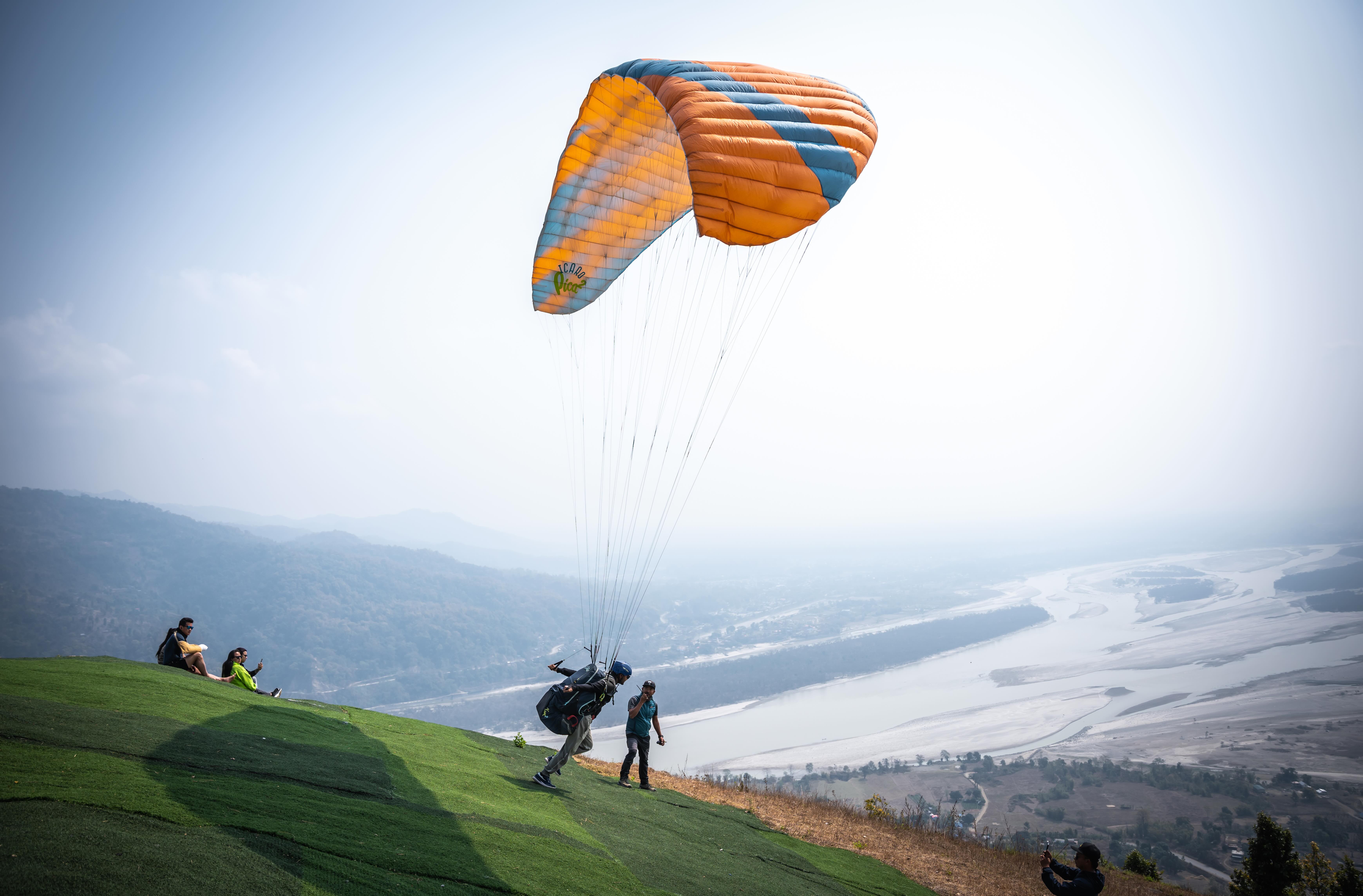
PC: Photo: Ghumante
While Nepal’s paragliding scene is most often associated with the picturesque skies over Pokhara, a quiet yet determined enterprise is taking it all the way down to the country’s eastern Plains. Flying Wonders Paragliding School, co-founded by veteran pilot Surain Gurung, is steadily gaining recognition as Nepal’s first paragliding academy based in the Inner Terai region.
Situated in Boptang village of Belaka Municipality in Udaypur district, the school offers a rare blend of accessible terrain, consistent flying conditions, and expansive panoramic views—making it an ideal destination for both novice and experienced paragliders.
Gurung began his paragliding journey in 2009, training and flying in Pokhara, long regarded as Nepal’s paragliding hub thanks to its scenic alpine backdrop and thriving commercial tandem flights. However, growing air traffic congestion and limited training opportunities led him to explore alternatives.
In 2017, on a suggestion from a fellow enthusiast Lekmani Jimi from Dharan, Gurung paraglided from Chinde Dada—a ridge above Dharan town. The experience, he says, opened his eyes to the region’s untapped potential.
Encouraged by his friend, Gurung explored further east and discovered an ideal training site in Boptang village.
“What’s special about this place is how easy it is to take off and land—unlike in Dharan and Pokhara. The distances and flying conditions are just right,” Gurung said.
Recognizing the location’s suitability, he proposed starting a dedicated paragliding school in Boptang—marking the first training center in Nepal’s Inner Terai.

A typical flight lasts around 15 minutes, with a direct, pitched road leading to the landing zone—making the entire process efficient and beginner-friendly. “The setup is so optimized that one of our trainees once completed nine flights in a single day,” Gurung said. “For context, I only managed that many during my entire training period in Pokhara.”
Founded in 2021, the School is now a fully certified institution under the Civil Aviation Authority of Nepal (CAAN), the Nepal Airsports Association (NAA), and the Association of Paragliding Pilots and Instructors (APPI).
Unlike mountain-based schools, Flying Wonders offers road access to both its take-off and landing zones, greatly simplifying logistics for students. During flights, paragliders can enjoy the stunning views of the Saptakoshi River, Koshi Tappu Wildlife Reserve, and even Mount Everest on clear days—making it not just a functional, but a visually compelling training ground.
The school offers courses ranging from 5 to 15 days, tailored to various skill levels. The curriculum covers everything from ground handling and wind direction awareness to soaring techniques, thermal flying, and supervised solo flights.
So far, more than 100 trainees have earned their paragliding licenses through the school.
Training pauses during March and April when high temperatures and thermal turbulence make flying challenging for beginners. However, experienced pilots can still take to the skies during this time. For newcomers, the post-Dashain season (October onward) offers calm weather and ideal conditions.
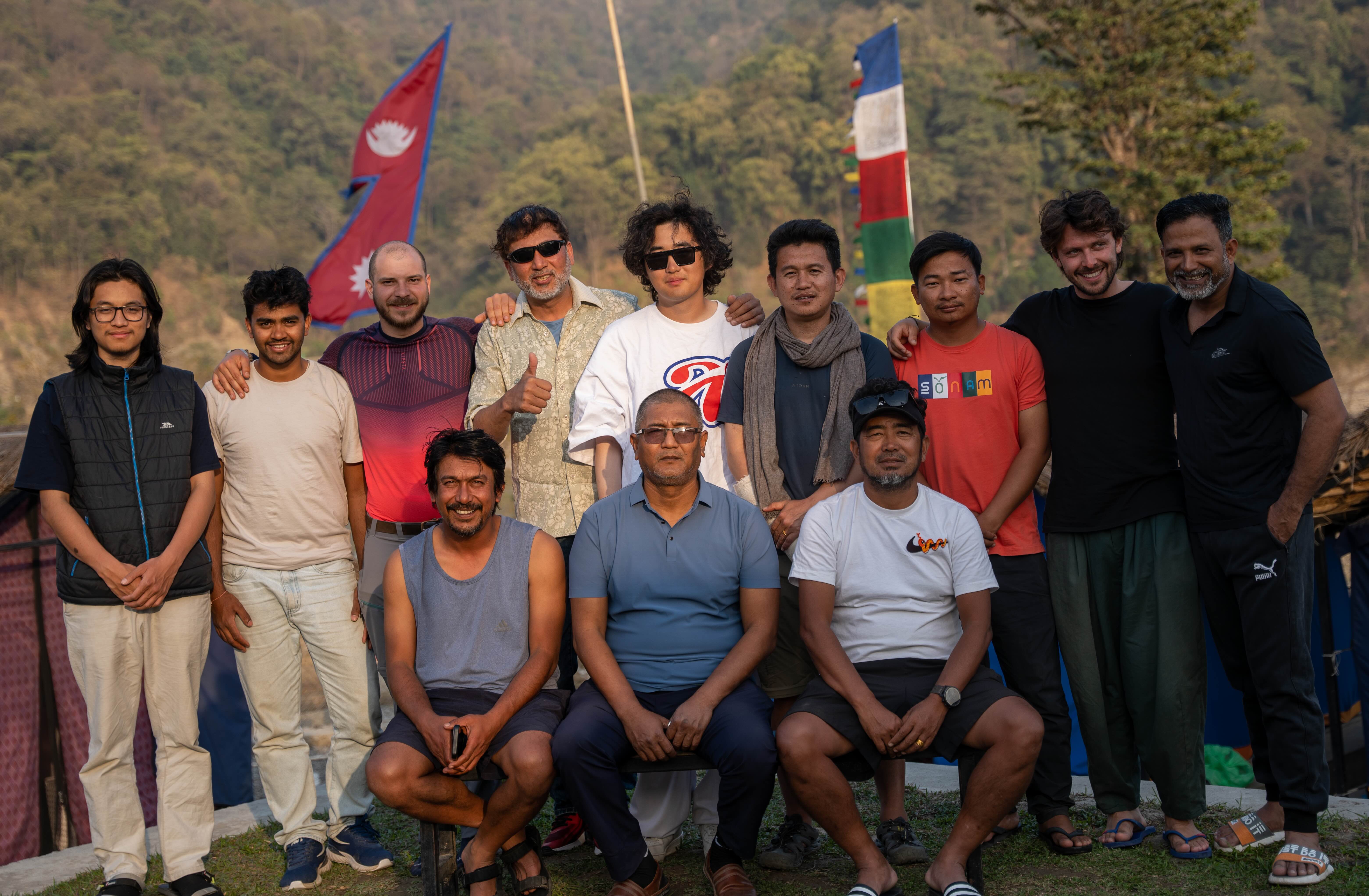
Paragliding is gaining traction among Nepali nationals, many of whom are beginning to see it as more than just a recreational activity. “It’s a skill, like any other form of training,” Gurung said. “For some, it’s the first step toward a career; for others, it’s about experiencing the freedom of flight.”
While the school primarily serves students from across Nepal, international interest is also growing. Past trainees include mountain guides, outdoor professionals, and adventure travelers.
Among them is Tenzeeng Sherpa, co-founder of outdoor apparel brand Everest Outfit and an IFMGA-certified mountain guide. He shared that he had tried nearly every adventure sport—rafting, cycling, canyoning, rock climbing, surfing, scuba diving, and wave boarding. Paragliding was the one activity he hadn’t attempted until last year.
"I felt like—why didn’t I do this earlier?" he said.
Sherpa trained at Flying Wonders in 2024 and later flew in the European Alps.
“Initially, I thought paragliding would be physically demanding,” Sherpa shared. “But after training, I realized it’s a skill I can enjoy even after I retire from climbing.”
Each year, an average of six climbers and mountain guides join the program, integrating paragliding into their trekking and expedition skillsets as the “hike and fly” trend gains traction.
Compared to Pokhara—where a 2019 accident and increasing air traffic led to a temporary ban on solo flights—Belaka offers a more controlled and less congested training environment.
“Safety is our top priority,” Gurung emphasized. “There’s always a risk in flying, but with the right training, preparation, and weather understanding, that risk can be significantly minimized.”
Flying Wonders reflects a broader shift in how Nepal’s geography is being utilized for adventure sports. With its unique mix of flatlands, river valleys, and low hills, the eastern Terai is emerging as a new hub for aerial adventure.
Gurung believes this evolution is long overdue. “People automatically associate paragliding with Pokhara, but Nepal is geologically diverse. Some want to fly over lakes, others over rivers or mountains. Every location offers its own experience.”

He cites Pakistan’s push to develop paragliding in Hunza as an example of how South Asian regions can harness landscape diversity to grow their tourism sectors.
As interest grows among Nepali youth and professionals alike, Flying Wonders Paragliding School is positioning itself not just as an entry point—but as a vital extension of Nepal’s adventure ecosystem.
“I used to think paragliding was a reckless sport,” said Arjun, one of the participants from the cohort. “But after flying myself, I found it peaceful—almost meditative.”
With favorable flying conditions between October and February, and fewer regulatory constraints compared to commercial hubs, the School continues to attract aspiring pilots looking for an approachable and affordable path into the skies.
For those seeking more than just a thrill—whether it’s a new skill, a career shift, or simply a new perspective—Flying Wonders offers a grounded yet exhilarating alternative in Nepal’s growing adventure landscape.
In February 2024, a group from Ghumante Nepal, a travel storytelling collective, took the beginner’s course at Flying Wonders. Watch the video of their adventure below: